
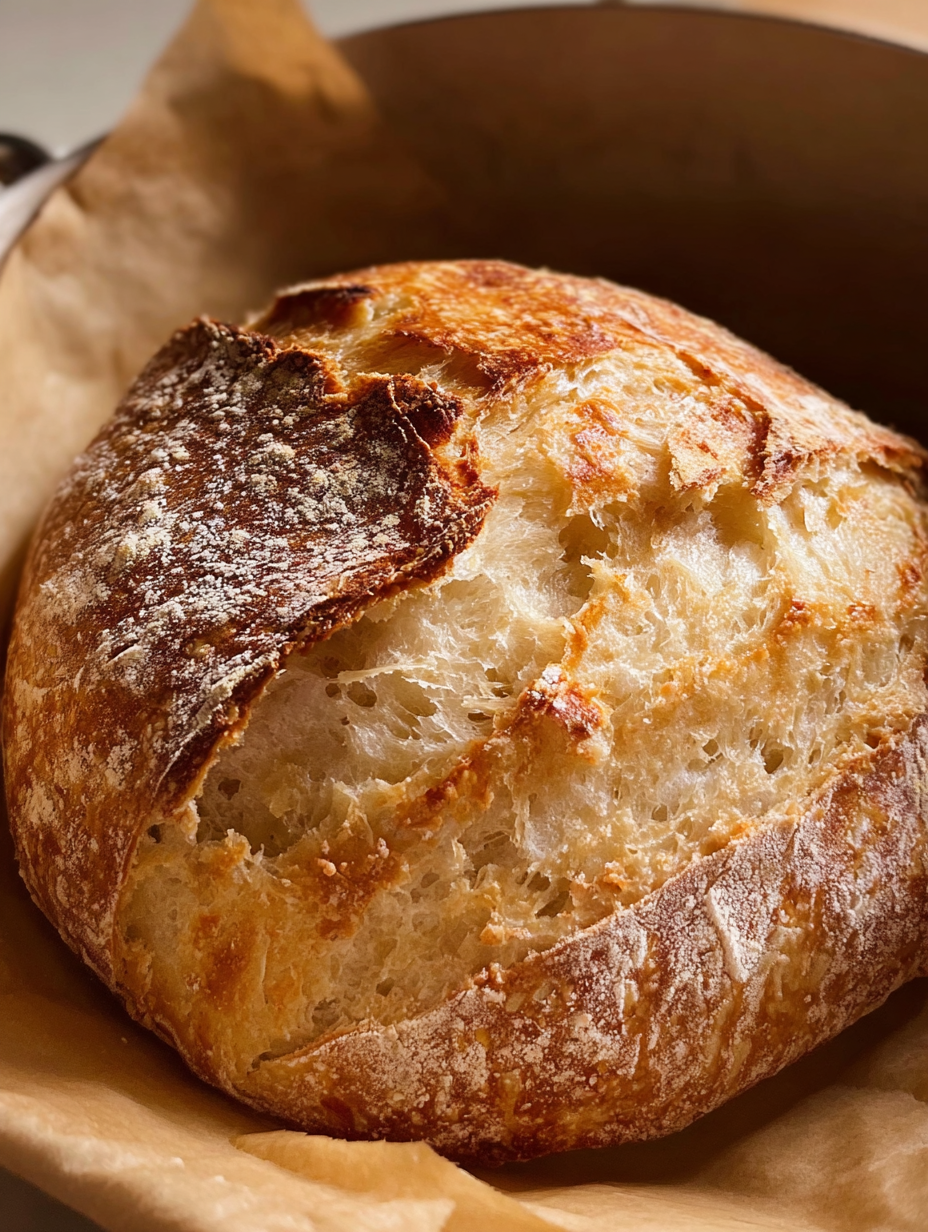
There is something deeply comforting about baking your own bread, especially when that bread is a golden, crackly loaf of easy sourdough bread. The smell alone makes your kitchen feel warm and alive, and that first slice with butter feels like a small victory worth celebrating.
This recipe was created specifically for beginners who want real sourdough without stress or complicated techniques. No stretch-and-fold marathons, no confusing schedules. Just simple steps, patience, and a loaf that looks and tastes like it came from an artisan bakery.
If you’ve been intimidated by sourdough before, this is the recipe that finally makes it click.
Why You’ll Love This Recipe
- Perfect for beginners with clear, simple steps
- No kneading required, just mix and rest
- Deep sourdough flavor with a crisp, crackly crust
- Flexible timing that works overnight or during the day
- Minimal ingredients you probably already have
- Consistent, reliable results every time

Step-by-Step Instructions
Step 1: Activate Your Sourdough Starter
First, make sure your sourdough starter is fully active. It should be bubbly, airy, and at least doubled in size. A ripe starter is the key to good rise and flavor. If needed, feed your starter and let it ferment in a warm spot until it’s ready to use.
Step 2: Mix the Dough
Next, add the active starter, warm water, salt, and flour to a large bowl. Stir everything together using a spoon, dough whisk, or clean hands. Mix until all the flour is hydrated and a shaggy, sticky dough forms. There should be no dry spots left.
Step 3: Bulk Fermentation (First Rise)
Cover the bowl and place it in a warm area of your kitchen. Let the dough rest and ferment for 10–12 hours. During this time, the dough will rise, develop structure, and build flavor. By the end, it should look puffy and roughly doubled in size.
Step 4: Shape the Dough
Once risen, gently turn the dough out onto a lightly floured surface. Using your hands, carefully shape it into a round loaf. Pull the dough toward you while rotating it slightly to create surface tension. This step helps the loaf hold its shape while baking.
Step 5: Proof the Loaf
Place the shaped dough on parchment paper and loosely cover it. Let it proof at room temperature for 1–2 hours until it looks relaxed and slightly puffed. When gently pressed, the dough should slowly spring back.
Step 6: Preheat the Oven and Dutch Oven
While the dough proofs, place your Dutch oven with the lid inside your oven. Preheat everything to high heat so the pot is fully hot. This creates steam during baking, which is essential for a good crust.
Step 7: Score and Bake
Carefully remove the hot Dutch oven. Score the top of the dough with a sharp blade to control how it expands. Transfer the dough (on parchment) into the pot, cover with the lid, and bake. After the first portion of baking, remove the lid so the crust can darken and crisp.
Step 8: Cool Completely
Finally, transfer the bread to a cooling rack. Let it cool fully before slicing. This step is crucial for the crumb to set properly and avoid a gummy texture.

Tips for Best Results
- Use a very active starter for proper rise
- Warm fermentation helps if your kitchen is cool
- Do not rush cooling, even though it’s tempting
- Bread flour gives better structure, but all-purpose works
- Simple scoring is best for beginner dough
FAQs
Is this sourdough bread good for beginners?
Yes, this recipe is designed specifically for first-time sourdough bakers.
Do I need a Dutch oven to bake sourdough?
A Dutch oven is strongly recommended because it traps steam and improves oven spring.
Can I use all-purpose flour instead of bread flour?
Yes, but the loaf may be slightly softer and less chewy.
Why did my sourdough turn out dense?
Most often, this means the starter was not active enough or fermentation was too short.
How should I store sourdough bread?
Store at room temperature wrapped loosely for up to 3 days, or freeze sliced bread for longer storage.
