
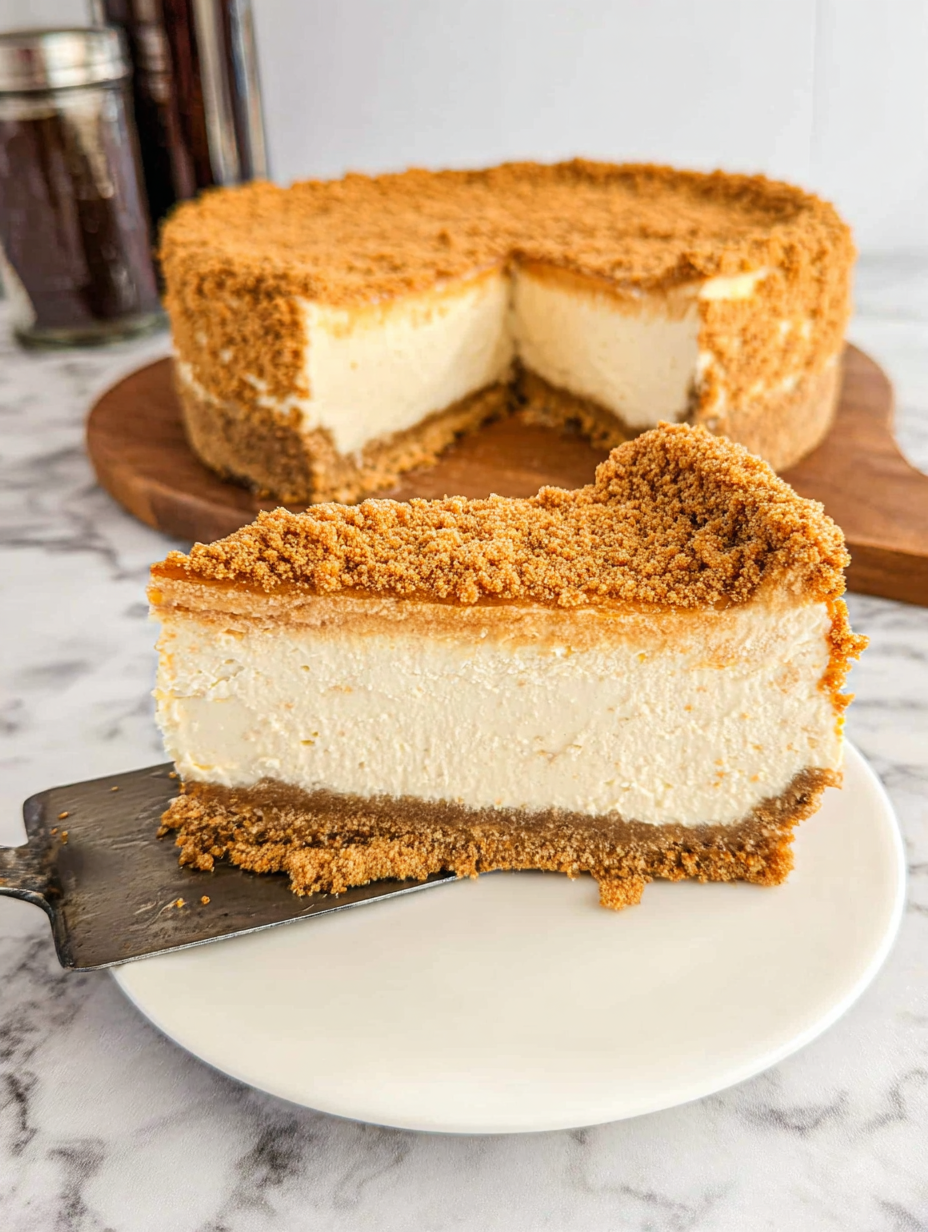
If you’re a cheesecake lover, this Double Crust Graham Cracker Cheesecake is pure heaven. Imagine a buttery, crisp graham cracker base, a velvety cream cheese filling, and a crumbly golden topping — yes, it has crust on both the bottom and the top! It’s rich, creamy, and surprisingly easy to make. Whether you’re baking for a holiday, a special occasion, or just because, this dessert never fails to impress.
Step-by-Step Instructions
Step 1: Prepare the pan
Preheat your oven to 350°F (175°C). Line the bottom of a 9-inch springform pan with parchment paper and lightly grease the sides with nonstick spray.
Step 2: Make the bottom crust
In a medium bowl, combine 3 cups of crushed graham crackers with ⅓ cup brown sugar. Stir in 10 tablespoons of melted butter until the mixture looks like damp sand. Press it evenly into the bottom of your prepared pan.
Bake for 15 minutes, then remove and set on a cooling rack. Increase your oven temperature to 400°F (200°C) while you make the filling.

Step 3: Prepare the cheesecake filling
In a stand mixer (or using a hand mixer), beat together cream cheese, granulated sugar, and brown sugar for about 2 minutes until smooth and fluffy.
Add heavy cream, sour cream, salt, and vanilla extract, and beat again until fully combined.
Next, add the eggs and yolk, mixing just until blended — don’t overmix!
Finally, mix in cornstarch and lime juice until incorporated.

Step 4: Pour and smooth
Pour the creamy batter into the cooled crust, smoothing the top with a spatula.

Step 5: Make the top crust
In another bowl, combine 2 cups crushed graham crackers, ¼ cup brown sugar, and 9 tablespoons melted butter. Mix until crumbly and evenly moistened.
Sprinkle this mixture evenly over the cheesecake batter, this is your second, buttery crust layer.

Step 6: Bake in a water bath
Wrap the outside of your pan with aluminum foil (bottom and sides) to keep water out.
Place the pan inside a larger roasting or broiler pan and pour in warm water until it reaches about 1 inch up the sides.
Bake at 400°F for 15 minutes, then reduce to 250°F and bake for 1 hour.

Step 7: Cool gradually
Turn the oven off and let the cheesecake rest inside with the door closed for 30 minutes. Then, crack the oven door and let it cool for another 30 minutes.
Remove from the oven, unwrap the foil, and let cool completely on a rack.

Step 8: Chill and serve
Cover with foil and refrigerate for at least 8 hours (overnight is best).
Before serving, run a knife around the edge of the pan, release the springform, and slice into thick, creamy pieces.
Tips & Variations
- Room Temperature is Key: Always bring your cream cheese, eggs, and cream to room temperature for a silky-smooth batter.
- Don’t Overmix: Too much mixing adds air bubbles, which can cause cracks. Mix until everything is just blended.
- Use a Water Bath: It’s worth the effort! It keeps the texture creamy and prevents cracks.
- Cool Slowly: Sudden temperature changes cause splitting — patience pays off here.
- Flavor Swaps: Add chocolate chips, swirl in raspberry sauce, or swap graham crackers for Oreo or Biscoff crumbs.
FAQs
1. Do I have to use a water bath?
Yes, if you want that ultra-creamy texture and smooth top. It helps regulate the oven temperature and prevents cracks.
2. Can I use store-bought graham cracker crumbs?
Absolutely! They save time and work just as well as crushed graham crackers.
3. How do I know when my cheesecake is done?
The edges should look set, and the center should still jiggle slightly when you tap the pan — it will firm up as it cools.
4. Can I make this cheesecake ahead of time?
Yes! Cheesecake actually tastes better after a night in the fridge. It allows the flavors to deepen and the texture to set perfectly.
5. How should I store leftovers?
Keep slices covered in the fridge for up to 5 days, or freeze for up to 2 months. Thaw overnight before serving.
